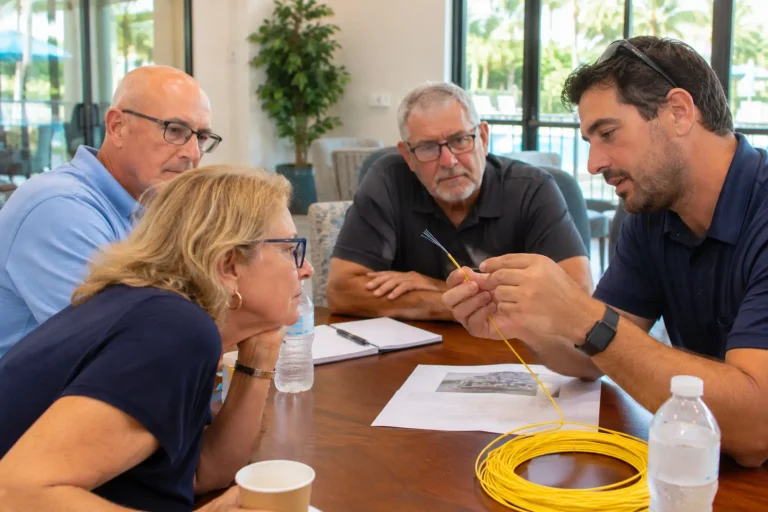
A bulk internet contract is one of the longest commitments an HOA or condo board will sign. It touches every owner’s assessment, every resident’s daily routine, and the community’s appeal to buyers for years. Yet many boards sign one after a single sales presentation, with no side by side comparison and no checklist of what to ask. A bulk internet contract deserves the same scrutiny as a roof replacement or an insurance renewal.
The good news is that most problems with bulk agreements are predictable. Rates that climb every year and fees missing from the proposal show up in the paperwork. So do exit terms that leave the community stuck. The same goes for support that routes residents to a call center that does not know the building.
This guide gives boards, community association managers, and property managers a practical checklist for reviewing a bulk internet contract before signing or renewing. If you are still deciding whether a bulk deal makes sense, start with our overview of bulk internet for HOA communities. It covers the network, pricing, service levels, construction, Florida statute requirements, and the questions to ask every provider, so you can bring a clear recommendation to owners.
In This Article:
- Why the Bulk Contract Matters Most
- Start With the Network
- Bulk Internet Pricing and Escalation
- Fees, Caps, and What’s Included
- Service Levels and Support
- Construction and Building Access
- Florida Law on Bulk Internet Contracts
- Bulk Contract Term, Renewal, and Exit
- A 12 Point Bulk Internet Contract Checklist
- Frequently Asked Questions
Why the Bulk Contract Matters Most
Sales presentations focus on speed, savings, and a smooth install. The contract decides what actually happens when speeds slip, prices rise, or a storm knocks service out. Boards that review the agreement line by line avoid most of the surprises that turn a good deal into a long running complaint.

Remember who you are signing for. Owners did not sit in the sales meeting, and many of them will only learn the terms when something goes wrong. Florida’s HOA and condo statutes also let owners move to cancel a board approved bulk contract. That motion can come at the next regular or special meeting. A contract that cannot survive owner questions is a risk to the board as well as the budget.
Who should review the agreement
- The board, for business terms and community fit.
- The community association manager, for operations, access, and resident communication.
- The association attorney, for legal language, liability, and statute compliance.
- A technology committee, if the community has residents with networking experience.
Start With the Network
Every promise in a bulk internet contract depends on the network behind it. If the network cannot deliver, the best written terms will not help residents at 8 p.m. on a weeknight.

Ask whether the connection is fiber all the way to each unit or whether it converts to coax or copper inside the building. Find out whether upload and download speeds are the same. Ask whether speeds can increase during the term without new construction. Then make sure the answers appear in the contract or an attached service description, not just in a brochure.
Faster.io runs a 100% fiber network with symmetrical upload and download speeds. In most communities each unit can get up to 1 Gig x 1 Gig symmetrical service, and the network supports circuits up to 100 Gig. You can see how Faster.io works with associations on the Communities page.
Network terms to look for in writing
- The type of connection delivered to each unit
- The speed tier each unit receives, both upload and download
- Whether speeds are a minimum, a maximum, or “up to”
- How and when speed upgrades are offered during the term
Bulk Internet Pricing and Escalation
The per unit monthly rate is the headline number, but the escalation clause often matters more. A low starting rate with a steep annual increase can cost owners more over the term than a slightly higher rate that stays flat or rises modestly.

Read exactly how pricing can change. Some agreements tie increases to a fixed percentage. Others tie them to an index or allow the provider to pass through certain costs. Model the total cost over the full term for each proposal so the board compares like with like.
Pricing questions for every bulk internet contract
- What is the per unit rate at signing?
- How often can the rate increase, and by how much?
- Is there a cap on increases?
- Does the rate change if the number of units changes?
- How are vacant or developer owned units billed?
Put these answers into one spreadsheet. When the committee lays every proposal out over the same term, the differences become much easier to explain to owners.
Fees, Caps, and What’s Included
Fees are where many bulk deals quietly get more expensive. Equipment rental, installation charges, “network” fees, and service call charges can add up, and some never appear in the headline rate. The contract should spell out exactly what the association pays and what residents might pay on their own.

Ask about data caps too. A cap or overage charge may not matter today, but household usage keeps climbing with 4K streaming, cloud backups, and smart home devices. A contract signed now should not penalize residents for normal use three years from now.
With Faster.io, advertised prices include all service features, with no hidden fees, and service includes unlimited data with no data caps or overage charges. Residents get Wi-Fi 7 for whole home coverage. If the community adds DIRECTV Bulk Streaming, residents pay for optional package upgrades directly, so the association is not paying for premium channels only some residents want. Details are on the Faster.io TV page.
Line items to confirm
- Equipment included in each unit, including Wi-Fi equipment
- Any installation or activation charges
- Data caps, throttling, or overage charges
- Charges for service calls or replacement equipment
- Which optional services residents pay for directly
A simple way to compare total cost
Ask each provider to fill in the same short table: the per unit rate in year one, the maximum possible rate in each later year, every fee the association pays, and every fee a resident could pay for standard service. Multiply by the number of units and add up the full term. Then put the result next to what residents pay today on individual plans, including equipment and fees. This takes about an hour for a committee, and it usually settles debates that would otherwise run across several meetings. It also gives the manager a clean summary to share with owners when the board explains its recommendation.
Service Levels and Support
A service level agreement turns reliability from a promise into a commitment. It should define uptime, how residents report outages, how quickly the provider responds, and what happens if the provider misses those targets.

Support deserves its own section of the review. Ask who answers resident calls, where they are located, and whether they are the provider’s own employees. Ask how escalations reach someone who knows your property. The goal is simple: residents should call the provider, not the board.
Faster.io’s own employees handle technical support at its facility, not an outsourced call center. Its network is built for over 99% reliability, and its commitments are published in its Service Level Agreement. Residents can also find help on the Faster.io support page.
Service terms worth reading twice
- Uptime commitments and how they are measured
- Response and repair targets for single unit and building wide outages
- Credits or remedies if targets are missed
- The escalation path for the manager and the board
- How the provider handles service restoration after hurricanes
Construction and Building Access
If the provider needs to build or upgrade the network, the contract should explain who pays, how the provider will limit disruption, and how crews will restore the property. This matters most in occupied condo buildings, where crews need access to risers, telecom rooms, and individual units.
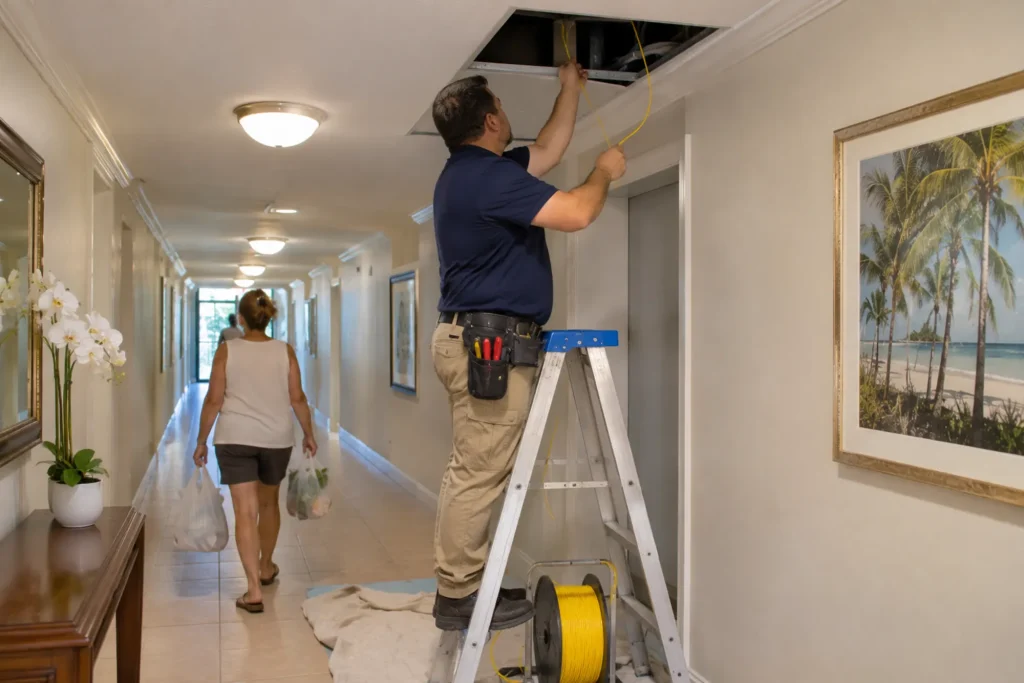
Ask for a construction plan before signing. It should cover scheduling, unit entry notices, work hours, cleanup, and who residents contact with questions. The contract should also address insurance, damage repair, and the condition of common areas when the work ends.
Faster.io’s process starts with a site survey and a custom fiber design for the property, followed by construction with minimal disruption. After the agreement is in place, Faster.io manages resident installs and onboarding, so the manager does not have to coordinate every appointment.
Access and wiring questions
- What equipment will be placed in common areas and telecom rooms?
- Who owns the inside wiring during and after the term?
- What happens to the equipment if the contract ends?
- How are resident appointments scheduled and confirmed?
Florida Law on Bulk Internet Contracts
Florida law specifically allows associations to buy communications and Internet services in bulk, and it sets a few rules every board should know before signing. Read the current statute text and confirm details with your association attorney.

Homeowners’ associations
Section 720.309, Florida Statutes treats the cost of bulk communications, information, or Internet services as an operating expense of the association when the governing documents provide for them. If they do not, the board may still contract for the services, with costs shared per parcel. Any member may move to cancel a board approved contract at the next regular or special meeting, and if nobody makes that motion or it fails, the contract stands as ratified for its stated term.
Condominiums
Section 718.115, Florida Statutes treats the cost of such services under a bulk contract as a common expense, includes a similar cancellation process, and states that a bulk contract under that section must be for at least two years.
Competitive bids for HOAs
Section 720.3055, Florida Statutes sets competitive bid requirements for HOA contracts above a certain share of the association’s annual budget, including reserves. Ask your attorney whether it applies to your contract.
Both bulk statutes also protect certain owners, such as some who are hearing impaired, legally blind, or receiving supplemental security income or food assistance. This section is general information, not legal advice.
Bulk Contract Term, Renewal, and Exit
The term and renewal language decides how much flexibility the community keeps. Many boards discover an automatic renewal only after the window to give notice has closed.

Read how the contract renews, how much notice is required to end it, and what happens to equipment and wiring when it ends. If the agreement renews automatically, put the notice deadline on the board’s calendar the day the board signs the contract.
Exit terms to confirm
- The length of the initial term
- Whether renewal is automatic and for how long
- The notice window and how notice must be delivered
- Termination rights if the provider misses service commitments
- What happens to equipment, wiring, and resident service at the end
Faster.io does not publish standard contract lengths because it builds each agreement around the community’s survey and design. Ask for the proposed term in writing and have your attorney review it.
A 12 Point Bulk Internet Contract Checklist
Use this checklist to compare every bulk internet contract on the same terms. Bring it to the committee meeting and ask each provider to answer in writing.
- Is the connection fiber all the way to each unit?
- Are upload and download speeds symmetrical?
- What speed does each unit receive, and how can it increase during the term?
- What is the per unit rate, and how can it change?
- Are there any fees beyond the advertised price?
- Are there data caps or overage charges?
- What Wi-Fi equipment is included in each unit?
- Who answers resident support calls?
- Is there a published service level agreement with clear remedies?
- Who pays for construction, and what is the plan for occupied buildings?
- How do renewal, notice, and termination work?
- Who owns the inside wiring when the contract ends?
When every proposal answers the same twelve questions, the board can explain its recommendation to owners in plain language, which makes the vote far easier.
Frequently Asked Questions
Is the pricing in a bulk internet contract locked, or does it escalate?
It depends on the agreement. Some contracts hold rates steady, while others allow increases on a fixed schedule or tied to an index. Read the escalation clause carefully and model the total cost over the full term for every proposal.
Who does a resident call when something breaks?
Under a well written bulk agreement, residents call the provider directly, not the board or the manager. Confirm who answers those calls and where they are located. Faster.io’s own employees handle support at its facility.
What happens to service during a hurricane?
Ask every provider how its network is built and how it restores service after a storm, and look for those commitments in the service level agreement. Residents should also plan for battery backup for their equipment, since every network needs power.
How long should a bulk internet contract be?
Terms vary by provider and community. For condominiums, Section 718.115 states that a bulk contract under that section must be for at least two years. Your association attorney can help the board decide what term fits the community.
Does a bulk internet contract need competitive bids in Florida?
For HOAs, Section 720.3055 sets competitive bid rules for contracts above a certain share of the annual budget. Whether it applies depends on the contract value and your governing documents, so ask your attorney before signing.
Can owners cancel a bulk contract the board signed?
Florida’s HOA and condo statutes allow a motion to cancel a board approved bulk contract at the next regular or special meeting. If nobody makes that motion or it fails, the contract stands as ratified for its stated term.
Sign Your Bulk Internet Contract With Confidence
A bulk internet contract shapes the community’s connectivity, budget, and owner satisfaction for years. Boards that review the network, pricing, fees, service levels, construction plan, statute requirements, and exit terms before signing avoid nearly every common problem. The checklist above turns a sales presentation into a fair comparison.
Start with the network, because no contract can fix a building that has outgrown its wiring. Then read the escalation clause, confirm there are no hidden fees or data caps, and make sure support and reliability commitments are in writing. Have the association attorney review the final agreement before it goes to owners.
Faster.io builds and runs its own 100% fiber network and gives communities one accountable partner for internet, TV, and phone, backed by its own in house support team. If your board is reviewing a new agreement or an upcoming renewal, request a site survey or bulk quote and we will answer every item on this checklist in writing. Businesses can request a business fiber quote on the same page or call (954) 887-1112.