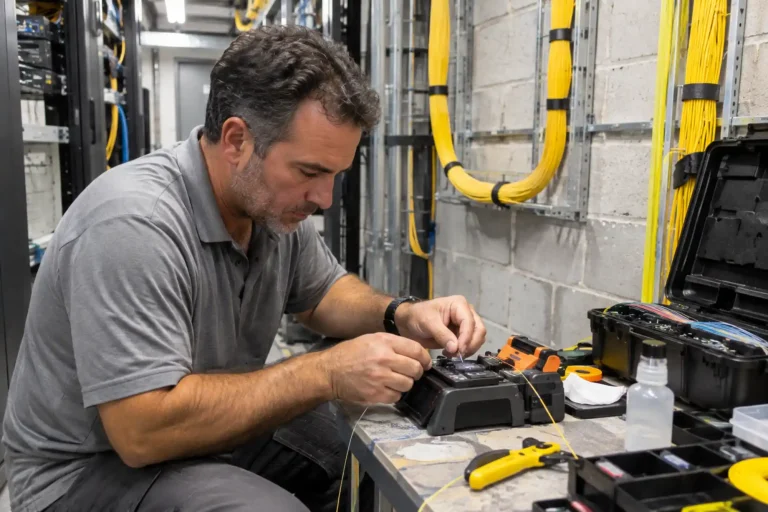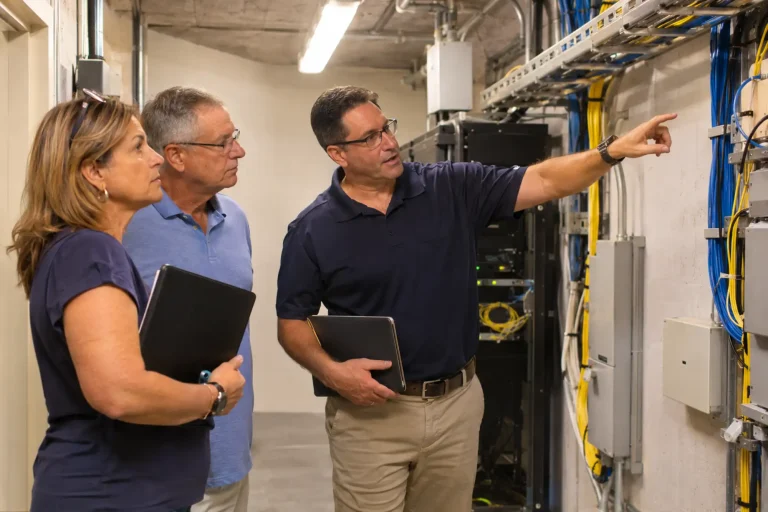
Every HOA board eventually gets the same complaint: the internet is slow, the cable bill keeps climbing, and nobody on the board has time to sort it out. Bulk internet for HOA communities is one of the few fixes that tackles all three problems at once. Instead of every homeowner buying service on their own, the association signs one agreement with one provider, and the provider connects every home under the same terms.
That sounds simple, and in many ways it is. But the details decide whether a bulk deal becomes the best line item in your budget or a ten year headache. The network the provider uses, how costs are allocated, what Florida law requires, and who residents call at 9 p.m. on a Sunday all matter more than the headline speed.
This guide walks through how bulk internet works for an HOA or condo association and where the savings come from. It also covers what Florida statutes say about bulk contracts and how to evaluate a proposal before you bring it to owners. We wrote it for board members, community association managers, and property managers who want a clear answer they can use at the next meeting.
In This Article:
- How a Bulk Internet Agreement Works
- Where Bulk Internet Savings Come From
- Why Fiber Matters in Bulk Deals
- Florida Law on Bulk Internet Contracts
- What Residents Get Every Day
- Bulk TV and Phone Options
- Common Concerns Boards Hear
- How to Evaluate a Bulk Internet Proposal
- From Site Survey to Move In
- Frequently Asked Questions
How a Bulk Internet Agreement Works
A bulk internet agreement is a single contract between the association and a provider that covers every home or unit in the community. The association pays the provider, and the regular assessment covers the cost. Residents do not sign individual contracts, do not negotiate rates, and do not deal with credit checks or promotional pricing that expires after a year.

Compare that with the retail model most communities start with. In a retail setup, each owner picks a plan, pays the provider directly, and lives with whatever price the provider sets at renewal. The association has no bargaining power, and the building’s wiring often stays in whatever condition it was in when the community was built.
The three parties in every bulk deal
- The association signs the agreement, approves the budget line, and represents owners in the relationship.
- The provider builds or upgrades the network, delivers service to every unit, and supports residents.
- The residents use the service and call the provider directly for help, without the board acting as a go between.
The manager usually coordinates the paperwork, site access, and resident communication. A good provider takes most of that load off the manager once service is live.
Where Bulk Internet Savings Come From
Bulk internet for HOA budgets saves money for a straightforward reason: a provider that serves every home at once spends less to acquire, bill, and support each customer. There is no door to door marketing, no churn from residents switching every promotion cycle, and one invoice instead of hundreds. Those savings show up as a lower per unit cost than residents typically pay on individual plans.
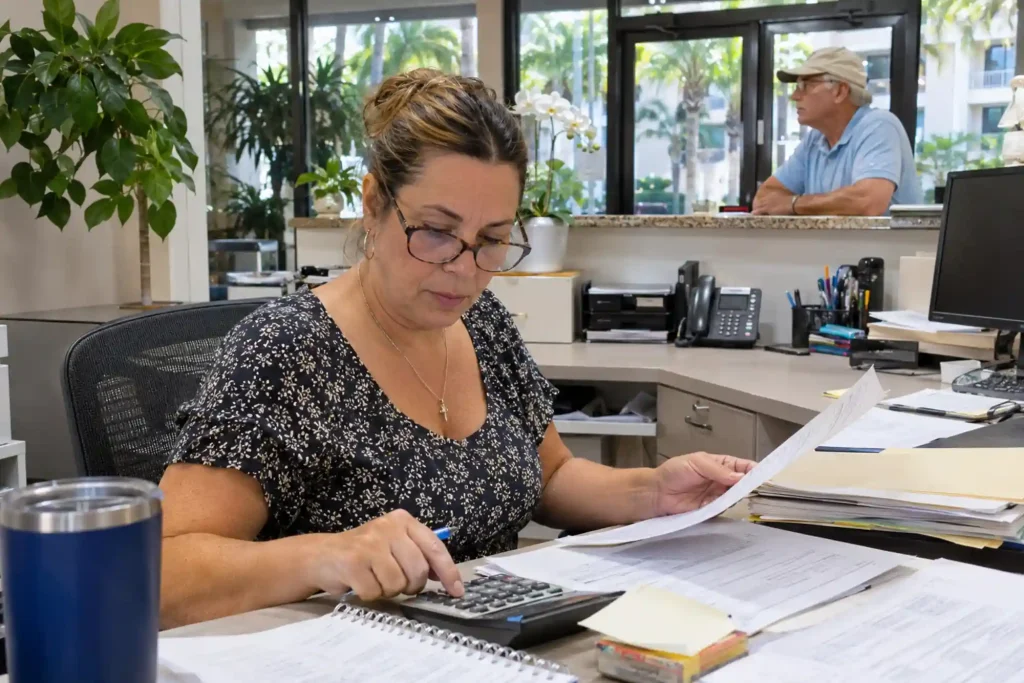
The savings are real, but boards should look at the full picture rather than the monthly rate alone. Ask what is included. With Faster.io, advertised prices include all service features with no hidden fees, and service comes with unlimited data, no data caps, and no overage charges. Many retail plans add equipment rental, installation, and “network” fees that never appear in the headline price.
Costs that belong in your comparison
- The per unit monthly cost under the bulk agreement
- What residents currently pay on retail plans, including equipment and fees
- Any price escalation built into the agreement over its term
- Construction or upgrade costs, and who pays them
- The cost of upgrading speed later, if the network can do it at all
When boards line these up side by side, the question usually stops being “can we afford bulk internet” and becomes “which network gives us the most for the same line item.”
Why Fiber Matters in Bulk Deals
A bulk agreement locks the community into one network for years, so the network itself is the most important part of the decision. Fiber carries data as light over glass strands, which gives it far more capacity than the coaxial cable or copper telephone wiring found in many older Florida buildings. That capacity is what lets a provider keep speeds steady when every resident is streaming at 8 p.m.
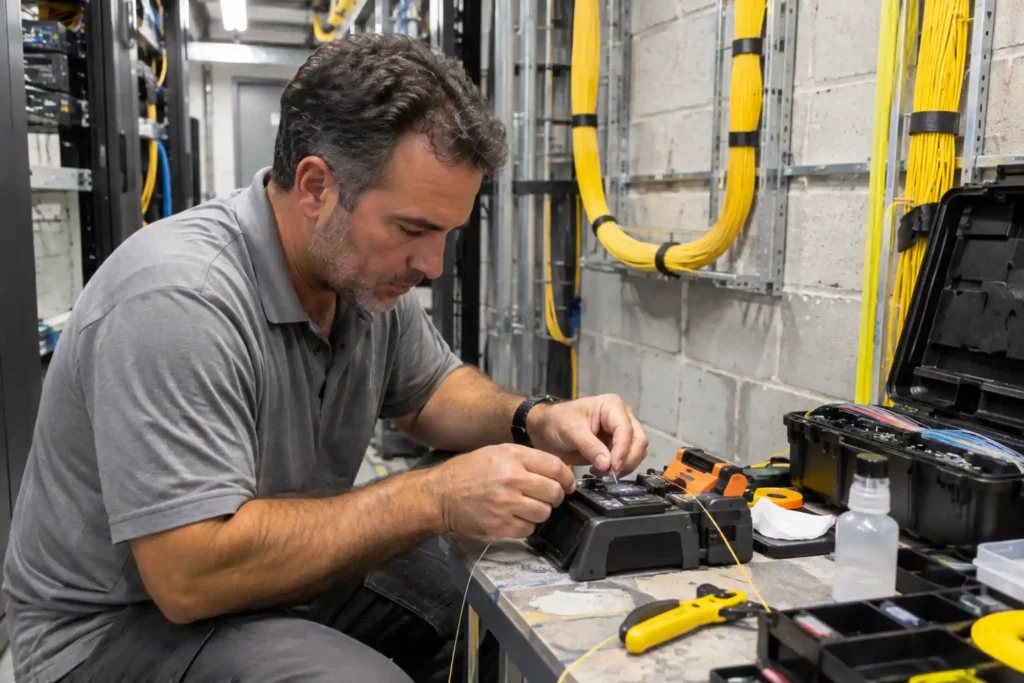
The difference that residents feel most is upload speed. Cable networks send far more data down than up by design, which is why video calls freeze and cloud backups crawl. Our guide to fiber vs cable internet for condos covers the difference in more detail. Faster.io runs a 100% fiber network with symmetrical upload and download speeds. In most communities each unit can get up to 1 Gig x 1 Gig symmetrical service, and the network supports circuits up to 100 Gig for larger needs.
Questions that reveal the real network
- Is the connection fiber all the way to each unit, or does it switch to coax or copper inside the building?
- Are upload and download speeds the same?
- How does the network handle evening peak usage?
- Can speeds increase later without new construction?
Some providers describe their service as “fiber powered” while the last stretch into each home is still coax. That last stretch is where most slowdowns happen, so it is worth asking directly. You can read more about how Faster.io serves associations on the Communities page.
Florida Law on Bulk Internet Contracts
Florida statutes specifically allow associations to buy internet service in bulk, which is one reason bulk agreements are so common here. The rules differ a little between homeowners’ associations and condominiums, so boards should know which chapter applies to them.

Homeowners’ associations (Chapter 720)
Under Section 720.309, Florida Statutes, the cost of communications, information, or Internet services obtained through a bulk contract is treated as an operating expense of the association when the governing documents provide for those services. If the documents do not provide for them, the board may still contract for the services, and owners share the cost per parcel rather than by percentage. The statute also lets any member make a motion to cancel a board approved contract at the next regular or special meeting. If nobody makes that motion, or the motion fails, the contract stands as ratified for its stated term.
Condominiums (Chapter 718)
For condominiums, Section 718.115, Florida Statutes treats the cost of communications, information, or Internet services under a bulk contract as a common expense. It includes a similar cancellation process at the next regular or special meeting, and it states that a bulk contract under that section must be for at least two years.
Both statutes also include protections for certain owners, such as some owners who are hearing impaired, legally blind, or receiving supplemental security income or food assistance, who can discontinue cable or video service without penalty. Boards should review the full text and have their association attorney review any bulk contract before signing. This article is general information, not legal advice.
What Residents Get Every Day
For residents, bulk internet for an HOA should feel like a utility that just works. They move in, connect, and never think about the provider again unless something breaks. That experience depends on three things: the network, the in home Wi-Fi, and the support behind it.

Fiber handles the network side. Inside the home, coverage matters just as much, because a fast connection is useless if the signal drops in the back bedroom. Faster.io provides Wi-Fi 7 for whole home coverage, which helps when a household has laptops, phones, smart TVs, cameras, and doorbells all online at once.
Where residents notice the difference
- Working from home: video calls stay clear because uploads are as fast as downloads.
- Telehealth: appointments with doctors do not drop halfway through.
- Streaming and gaming: evening slowdowns are far less common on fiber.
- Smart home devices: cameras and sensors upload footage without choking the connection.
Support is the part boards often overlook. Faster.io’s own employees handle technical support at its facility, not an outsourced call center. Residents can find help resources on the Faster.io support page, and the board does not have to field internet complaints at every meeting.
Bulk TV and Phone Options
Many Florida communities first signed bulk agreements for cable TV, and some still pay for TV packages that residents rarely watch. A modern bulk deal can bundle internet with streaming TV and phone service, or keep them separate, depending on what owners want.

Faster.io offers DIRECTV Bulk Streaming for all residents, with optional package upgrades billed directly to the resident. That way the association covers a shared base package, and residents who want premium channels or sports pay for them on their own. Details are on the Faster.io TV page.
For phone service, Faster.io’s digital voice includes call forwarding, call waiting, voicemail, and unlimited domestic long distance including Canada. That matters in communities with many older residents who still rely on a home phone, or where clubhouses, gates, and offices need a dependable line.
Should TV be part of the bulk agreement?
It depends on your owners. Survey residents before you decide. If most of them already stream, a lighter shared TV package with optional upgrades may make more sense than a large cable lineup paid for by everyone.
Common Concerns Boards Hear
Even a strong proposal for bulk internet for HOA residents will draw questions from owners. Boards that prepare answers ahead of time get to a vote faster and with fewer surprises.

“I don’t want to pay for something I won’t use.”
Most owners use the internet daily, and the per unit cost under a bulk agreement is typically lower than what they would pay on their own. For the few who truly do not need service, explain how the statute and the governing documents handle cost sharing, and that certain protected owners have specific rights under Florida law.
“Can I still choose my own provider?”
Under a bulk agreement, every unit receives service from the contracted provider, and that cost is part of the assessment. Residents can still buy service from another provider that serves the community if they choose to, but they would pay for it separately. Boards should explain this clearly before the vote.
“Will construction tear up the community?”
This is a fair worry, especially in occupied buildings. Ask any provider how they plan construction, schedule unit entry, and communicate with residents. Faster.io designs each build around the community and works to keep disruption to a minimum.
“What happens during hurricane season?”
Ask how the network is built, where equipment sits, and how the provider restores service after a storm. A provider whose own employees handle support can usually coordinate a faster response than one routing calls through an outsourced center.
How to Evaluate a Bulk Internet Proposal
Comparing offers for bulk internet for HOA communities is easier when every provider answers the same questions. Use this checklist at your next board or committee meeting, and pull out the full 12 question contract checklist when you reach the contract review stage.

- Network type: Is it fiber all the way to each unit?
- Speeds: What upload and download speeds does each unit receive, and are they symmetrical?
- Data limits: Are there data caps or overage charges?
- Pricing: What is the per unit cost, and are there any fees beyond the advertised price?
- Escalation: How does pricing change over the term?
- Wi-Fi: What in home Wi-Fi equipment is included?
- Support: Who answers resident calls, and where are they located?
- Reliability: Is there a published service level agreement?
- Construction: Who pays for the build, and how is disruption managed?
- Exit terms: What happens at the end of the term, and who owns the inside wiring?
Faster.io publishes its commitments in a Service Level Agreement, and the network is built for over 99% reliability. Ask every provider for their written commitments, not just a sales sheet. Then have the association attorney review the contract language before it goes to owners.
From Site Survey to Move In
A project to bring bulk internet to an HOA follows a predictable path. Knowing the steps helps the board set expectations with owners from the start.
- Site survey: The provider reviews the property, existing wiring, telecom rooms, and pathways.
- Custom fiber design: Engineers plan how fiber reaches every building and unit.
- Agreement: The board reviews terms with counsel and approves the contract.
- Construction: Crews build the network with minimal disruption to residents.
- Resident installs and onboarding: The provider schedules installs, sets up Wi-Fi, and explains how to get help.
With Faster.io, the company manages resident installs and onboarding directly, so the manager is not stuck coordinating hundreds of appointments. Timelines depend on the size and layout of each community, which is why the process starts with a survey rather than a guess.
Frequently Asked Questions
How does billing work for bulk internet for HOA residents?
The association pays the provider under one agreement, and each owner’s regular assessment includes the cost. Residents do not receive a separate internet bill for the base service. A resident who orders an optional upgrade, such as a premium TV package, pays for it directly.
Can residents still choose their own internet provider?
Every unit receives service from the contracted provider as part of the assessment. A resident can still buy service from another provider that serves the community, but they would pay for it separately. Florida’s HOA statute also protects residents’ access to franchised cable or video providers when they pay those providers directly.
How long are bulk internet contracts?
Terms vary by provider and community, so ask for the term in writing and compare it across proposals. For condominiums, Section 718.115 states that a bulk contract under that section must be for at least two years. Your association attorney should review the term and renewal language.
Does bulk internet lower costs for an HOA?
In most cases, yes. One agreement covering every unit lowers the per unit cost compared with what residents typically pay on individual plans. The real savings depend on fees, escalation terms, and what is included, so compare total cost rather than the monthly rate alone.
Can owners cancel a bulk contract after the board signs it?
Florida’s HOA and condo statutes both allow a motion to cancel a board approved bulk contract at the next regular or special meeting. If nobody makes that motion, or the motion fails, the contract stands as ratified for its term. Check the current statute and your governing documents with counsel.
Does bulk fiber internet affect property value?
Buyers and renters increasingly ask about internet before they choose a home. A community wired with fiber can point to fast, symmetrical service as an amenity. The effect on value varies by market, so treat it as one part of the case rather than a guarantee.
Bringing Bulk Internet to Your HOA
Bulk internet for HOA communities works best when the board treats it as an infrastructure decision, not just a monthly rate. The right agreement lowers the per unit cost, gives every resident the same reliable service, and takes internet complaints off the meeting agenda. The wrong one locks owners into an aging network for years.
Start with the network: fiber all the way to each unit, with symmetrical speeds and no data caps. Then look at what is included, how support works, and what the contract says about pricing and exit terms. Use the checklist above so every proposal answers the same questions, and have your attorney review the final language.
Faster.io builds and runs its own 100% fiber network and gives communities one accountable partner for internet, TV, and phone, backed by its own in house support team. If your board is reviewing a bulk agreement or a contract renewal, request a site survey or bulk quote and we will walk your community through the options. Running a business? Ask us for a business fiber quote through the same page, or call (954) 887-1112.